
Introduction
Diabetes is one of the fastest-growing lifestyle diseases worldwide, affecting millions of people every year. Unfortunately, many individuals ignore the early warning signs, assuming they are caused by stress, fatigue, or aging. Delayed diagnosis can lead to serious complications affecting the heart, kidneys, eyes, nerves, and blood vessels.
Recognizing the early signs and symptoms of diabetes and seeking timely medical care can make a significant difference in preventing complications. At Advaya Hospitals, LB Nagar, patients receive comprehensive diabetes care, including accurate diagnosis, personalized treatment plans, lifestyle counseling, and long-term monitoring to help maintain healthy blood sugar levels.
What is Diabetes?
Diabetes is a chronic medical condition in which the body is unable to regulate blood sugar (glucose) effectively. This happens when the pancreas produces insufficient insulin or when the body cannot properly use the insulin it produces.
The three major types of diabetes include:
- Type 1 Diabetes
- Type 2 Diabetes
- Gestational Diabetes
Among these, Type 2 diabetes is the most common and is often associated with lifestyle factors such as obesity, poor diet, and lack of physical activity.
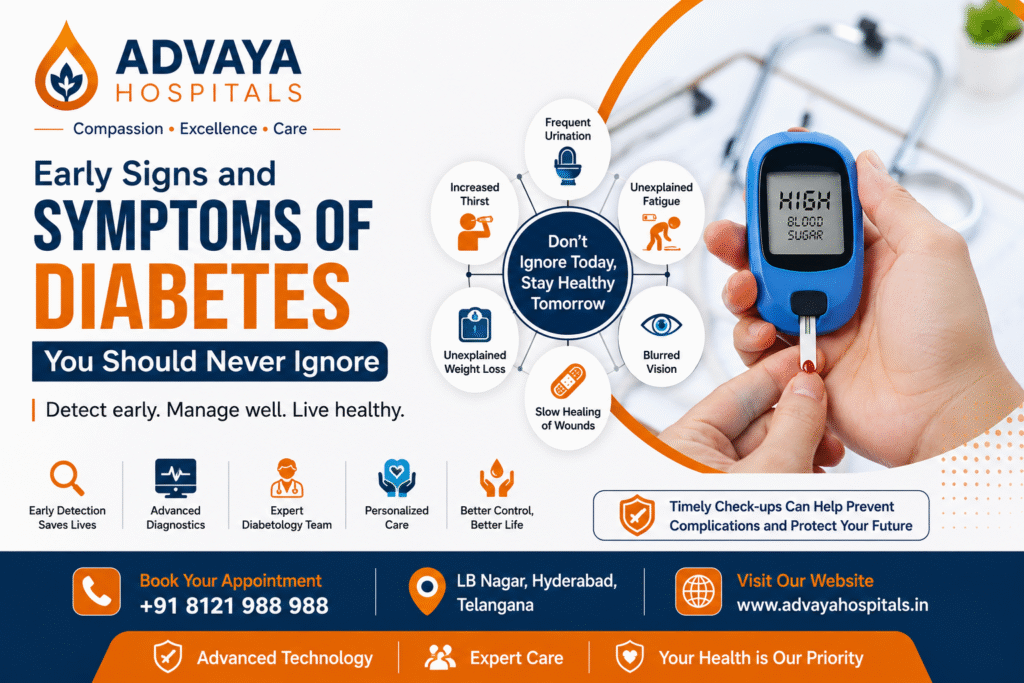
Early Signs and Symptoms of Diabetes You Should Never Ignore
Many diabetes symptoms develop gradually, making them easy to overlook. Early diagnosis allows for better management and helps reduce the risk of complications.
Frequent Urination
High blood sugar forces the kidneys to work harder, leading to frequent urination, especially during the night.
Excessive Thirst
Because the body loses more fluids through increased urination, patients often experience persistent thirst.
Increased Hunger
Even after eating, individuals may continue to feel hungry because glucose cannot effectively enter the body’s cells for energy.
Unexplained Weight Loss
Unexpected weight loss without changes in diet or exercise may indicate uncontrolled diabetes.
Constant Fatigue
When glucose cannot be used efficiently for energy, patients often experience ongoing tiredness and weakness.
Blurred Vision
High blood sugar levels can affect the eye lenses, causing temporary or persistent blurred vision.
Slow Healing of Cuts and Wounds
Poor circulation and elevated blood sugar slow the body’s natural healing process.
Frequent Infections
People with diabetes may experience repeated skin infections, urinary tract infections, or fungal infections.
Tingling or Numbness in Hands and Feet
Long-term high blood sugar can damage nerves, causing numbness, tingling, or burning sensations.
Dry Skin and Itching
Reduced circulation and dehydration often contribute to dry, itchy skin.
Who is at Higher Risk of Diabetes?
Certain individuals are more likely to develop diabetes.
Risk factors include:
- Family history of diabetes
- Overweight or obesity
- Sedentary lifestyle
- High blood pressure
- High cholesterol
- Polycystic Ovary Syndrome (PCOS)
- Age above 40 years
- Unhealthy eating habits
Regular health checkups are especially important if you have one or more of these risk factors.
Why Early Diagnosis Matters
Many people continue living with diabetes for years without realizing it. During this time, elevated blood sugar can silently damage multiple organs.
Untreated diabetes may lead to:
- Heart disease
- Stroke
- Kidney disease
- Diabetic neuropathy
- Vision loss
- Foot ulcers
- Poor wound healing
Early diagnosis allows doctors to begin treatment before permanent complications develop.
How is Diabetes Diagnosed?
Doctors use several investigations to confirm diabetes and evaluate overall health.
Common tests include:
- Fasting Blood Sugar (FBS)
- Post-Prandial Blood Sugar (PPBS)
- Random Blood Sugar
- HbA1c Test
- Kidney Function Tests
- Lipid Profile
These tests help determine blood sugar control and identify any diabetes-related complications.
Diabetes Treatment at Advaya Hospitals
At Advaya Hospitals, diabetes care focuses on controlling blood sugar while preventing long-term complications.
Treatment plans may include:
Comprehensive Evaluation
A detailed assessment helps determine the type and severity of diabetes.
Personalized Medication
Treatment is tailored according to the patient’s blood sugar levels, medical history, and lifestyle.
Nutritional Counseling
Patients receive guidance on healthy eating habits that support better glucose control.
Lifestyle Modification
Doctors encourage regular exercise, weight management, and stress reduction to improve insulin sensitivity.
Regular Monitoring
Routine follow-up visits help ensure effective treatment and allow medications to be adjusted when necessary.
Preventive Screening
Regular screening for kidney, eye, nerve, and cardiovascular complications helps maintain long-term health.
Tips to Prevent Type 2 Diabetes
Simple lifestyle changes can significantly reduce your risk.
Follow these healthy habits:
- Maintain a healthy body weight
- Exercise for at least 30 minutes most days
- Eat a balanced diet rich in vegetables and whole grains
- Limit sugary foods and beverages
- Stay hydrated
- Get adequate sleep
- Manage stress effectively
- Schedule regular health screenings
Healthy habits not only prevent diabetes but also improve overall well-being.
When Should You Visit a Doctor?
Consult a healthcare professional immediately if you notice:
- Frequent urination
- Constant thirst
- Unexplained weight loss
- Persistent fatigue
- Blurred vision
- Slow-healing wounds
- Tingling in the hands or feet
- Recurrent infections
Prompt evaluation and treatment can help prevent serious health problems.
Why Choose Advaya Hospitals?
Advaya Hospitals provides comprehensive diabetes management with a patient-centered approach.
Key advantages include:
- Experienced medical specialists
- Accurate diagnostic facilities
- Personalized diabetes treatment plans
- Lifestyle and nutrition counseling
- Regular monitoring of blood sugar
- Screening for diabetes-related complications
- Modern medical infrastructure
- Compassionate and coordinated patient care
The hospital offers integrated healthcare services under one roof, ensuring patients receive quality care at every stage of diabetes management.
Conclusion
Diabetes often develops silently, but your body usually gives early warning signs that should never be ignored. Recognizing symptoms such as frequent urination, excessive thirst, fatigue, blurred vision, and slow-healing wounds can lead to timely diagnosis and effective treatment.
At Advaya Hospitals, LB Nagar, experienced healthcare professionals provide comprehensive diabetes care through advanced diagnostics, personalized treatment, lifestyle counseling, and ongoing monitoring to help patients lead healthier lives and prevent long-term complications.
Contact Details
Advaya Hospitals
Address: Nagarjuna Sagar Ring Road, Beside Sprint Diagnostics, LB Nagar, Hyderabad, Telangana – 500074
Phone: +91 91543 61171
Timings: 24/7 Emergency & Inpatient Care (Consultation timings may vary by specialty.)
Website: https://advayahospitals.in/